"Cows are my passion. What I have ever sighed for has been to retreat to a farm and live entirely surrounded by cows–and china." – Charles Dickens

April 4, 2012

Violet Jelly: First Canning of the Year!


Violet jelly has to be the easiest jelly I've ever made: the hardest part, to be honest, is leaning down and picking the delicate flowers. After a good forty-five minutes of picking (myself, our youngest boy and his friend––ok, I paid them!)––and lots of me saying "OH, look at the Jack-in-the-Pulpit! The trillium!" (a new cache we discovered up the road from our farm) or the kids showing me great new finds like clusters of small yellow violets––we, miraculously it seemed, had 2 heaping cups of violet blossoms (the recipe for jelly called for four cups of violets, but more about that in a moment).


The purple Sweet Violet (violet odorata) is what you want for jelly.
[In the Language of Flowers, the blue violet is a symbol for faithfulness.]

I first started using violets (and Johnny-Jump Ups, which seemed to grow all over the lawns in our part of New Hampshire) in crystallized form or to decorate small cakes at the tea room I used to operate at Barrett House in New Ipswich, New Hampshire (many moons ago). They have a very delicate, subtly sweet flavor and are perfect for dainty desserts (as long as they are not sprayed), or just thrown into a salad. You can even make them into vinegar and sherbet.
As there are many varieties of violets in Kentucky that grow on roadsides and at the edges of fields before the grasses come in, and early in the spring, I wanted to find ways to "put them up," particularly the prolific sweet purple violet. [There are other more scarce varieties that grow in the woodlands.] I was not disappointed. There are violet recipes galore on the Internet and in several of the cookbooks that I, um, "collect." NOTE ~ You will want to pick in an area that is not sprayed, or, at least, has not been sprayed since the summer prior. As they are the first flowers on the roadside, you should be fine as long as you choose a less-traveled road, or better yet, your own yard or farm lane!


Violet Jelly
  • 2 cups violets (see below)
  • juice of 1 lemon
  • 4 cups sugar
  • 1 packet of Sure-Gel
Yield - 4-5 half-pint jars of jelly

The night before: Place the violets in a glass quart jar and cover with boiling water to the top of the jar. You will see the violet petals immediately start to steep and cast off a lovely pale blue (middle photo, above). Cover and set aside to rest over night or for at least a few hours. The next morning the violets will have floated all through the "violet tea" and will be pale in color (right photo, above). Strain the "tea" through a sieve, into a quart measuring cup or bowl, and discard petals.

Here is the specific recipe I borrowed from to make this.

NOTE ~ I used two cups of violets and doubled the recipe everywhere else so I was technically using half the amount of violets and got double the amount of jelly. However, I believe I got the same intended effect. Using four cups of violets probably just intensifies the flavor a bit more. I'll let you know next year!

Add the lemon juice and watch the pale violet color transform before your eyes.

Pour the violet and lemon juice mixture into a non-reactive pan.
Mix in the powdered pectin.
Add sugar and stir until boiling. Then boil again, hard, for one minute.
Pour into half-pint glasses that have been sterilized. Boil for 10 minutes.
[I use a simple hot water bath in a favorite old vegetable steamer for quick batches.]

And now I can't wait for rose season to make rose jelly and other herbal delights using the same infusion process.

You come back when you're ready! 

Catherine

April 1, 2012

Spring Vacation !

"Just living is not enough," said the butterfly,
"one must have sunshine, freedom, and a little flower.”

― Hans Christian Anderson
We have been blessed with an early spring (winter never really arrived here this past season) and everything has been coming all at once––at least when things are somewhat sequential you know what to expect and you can enjoy things as they come. There is such profusion of blossom and fragrance and great weather right now that it's like spring on steroids! Most days, as the weather has been so glorious, it's a question of "OK, do I clean out that closet or that office pile or do I just go outside and play in the dirt?" You can imagine what I've been choosing as much as I am able.

Like the plants, I tend to bloom in the spring. I want to be out kicking around, visiting, and outside (especially in these lovely more temperate months before it gets too hot). I have a very different temperament in the spring and summer and have learned to go with it. Part of me needs to hermit-up in the winter and part of me needs this great stretch of weather and the warmer, sunnier months ahead. In Kentucky it's like we go from drab brown to glorious technicolor in a matter of a few weeks.

This swallowtail visited the lilacs that Henry picked for me today. I had just put
them out on the porch table at the cottage to enjoy with dinner.
And now you know why I usually have my camera within reaching distance!

Our boys are off for Easter vacation and we are puttering around our farm, taking a few day trips, and enjoying each other's company. Eli, helped by Henry (and friend Gabe today), has started another fort. This one is in shouting distance from the cottage porch where I've been spending much of my time planting seeds in flats, sorting through stuff, doing some writing, and serving many meals. [It's really unheard of to be able to eat outside in Kentucky in March!] The porch will also be my summer office, before the sun comes around to the west. I so enjoy the big picnic table that my great-grandparents (and that we had in Akron growing up) had made for cookouts and that has graced our porch for several summers now. There are wonderful vibes in that old wood and it easily seats twelve (my great-grandmother seemed to get sets of twelve in dining-related things and linens: it's a habit that I seem to have inherited, too).

I have some other projects for the week ahead and will blog about some of them. They are, in no particular order:
  1. Finish planting four large galvanized tubs with spring vegetables;
  2. Finish starting seeds;
  3. Plant some containers and tubs (but I need to remember that frost could occur! Our "last frost date" is usually in mid-May but often sooner);
  4. Make Easter sugar cookies using all of the vanilla combos that I've had percolating since last fall;
  5. Pick violets for vinegar and jelly;
  6. Resume spring cleaning on rainy days (if there are any this week);
  7. Attend the first produce auction of the season [See GROW Casey County];
  8. Clean out the henhouse!
And, the best news is that our daughter will be here in a few weeks for a good stretch of time between resort seasons. It's always wonderful to have her with us again.

You come back when you're ready!

Catherine


Postscript ~ Our daughter has bumped up her visit! She'll be arriving on Good Friday instead–just in time for Easter (and until she has to return to work in early May)! Now, this Snow White had better bump up her plans to spring clean that cottage...Hi Ho Hi Ho!

March 30, 2012

Dinner from the Pantry

Braised short beef ribs in a tomato-ginger sauce, creamy polenta with cheese and pan-grilled zucchini.

We've been "eating down the freezers" these past few months (yes, I said freezers) and making a wee dent in our vast Apocalyptic Pantries (yes, that's also plural). Believe me, I was a food hoarder gatherer well before the 2012 craziness but I have to say that with the continued high price of gas, living far enough from any store to justify a quick run, and very far away from certain products that I like to have on occasion, it's great to have food at the ready on the farm. It's also economical as we build our cattle herd and face other farm costs: I can count on one hand how many times I've been to a big grocery store since January 1st. 

I also know that, in a pinch, if we lose power for an extended period on our ridge, as has happened in ice storms of the past, we will have a lot of food to share with our neighbors from our melting freezers. I say this because I find it appalling how some food gatherers hoarders as portrayed on television shows seem to stock up as much on weapons as on food to keep it away from their neighbors and other marauding bands of hungry crazy people (or is it zombies?). [The writer and community-minded self-sufficient living expert, Kathy Harrison, featured on Doomsday Preppers, is not of this vein and I highly recommend her blog for useful information on sustenance living.]

This excellent Italian polenta has been in my pantry, unopened, since 2007
when I purchased it in Boston's North End. Because it was vacuum-sealed,
it was perfectly fresh. It also has the delightful and nutty addition of buckwheat.

While I've been trying to be gluten-sugar free this Lenten season, I've not been as vigilant as I might be (I lasted three weeks, however). This meal, except for the dessert, was just that (assuming that my corn-buckwheat polenta mix has no wheat in it because I can't read Italian). I've been dabbling with new ways to eat that don't have to involve traditional gluten-dependent baking or cooking methods (very hard habit to change after forty years of baking and cooking this way) and also being more portion conscious, too.

Five medium zucchini, sliced, and stir-fried in the skillet with a bit of olive oil and butter.

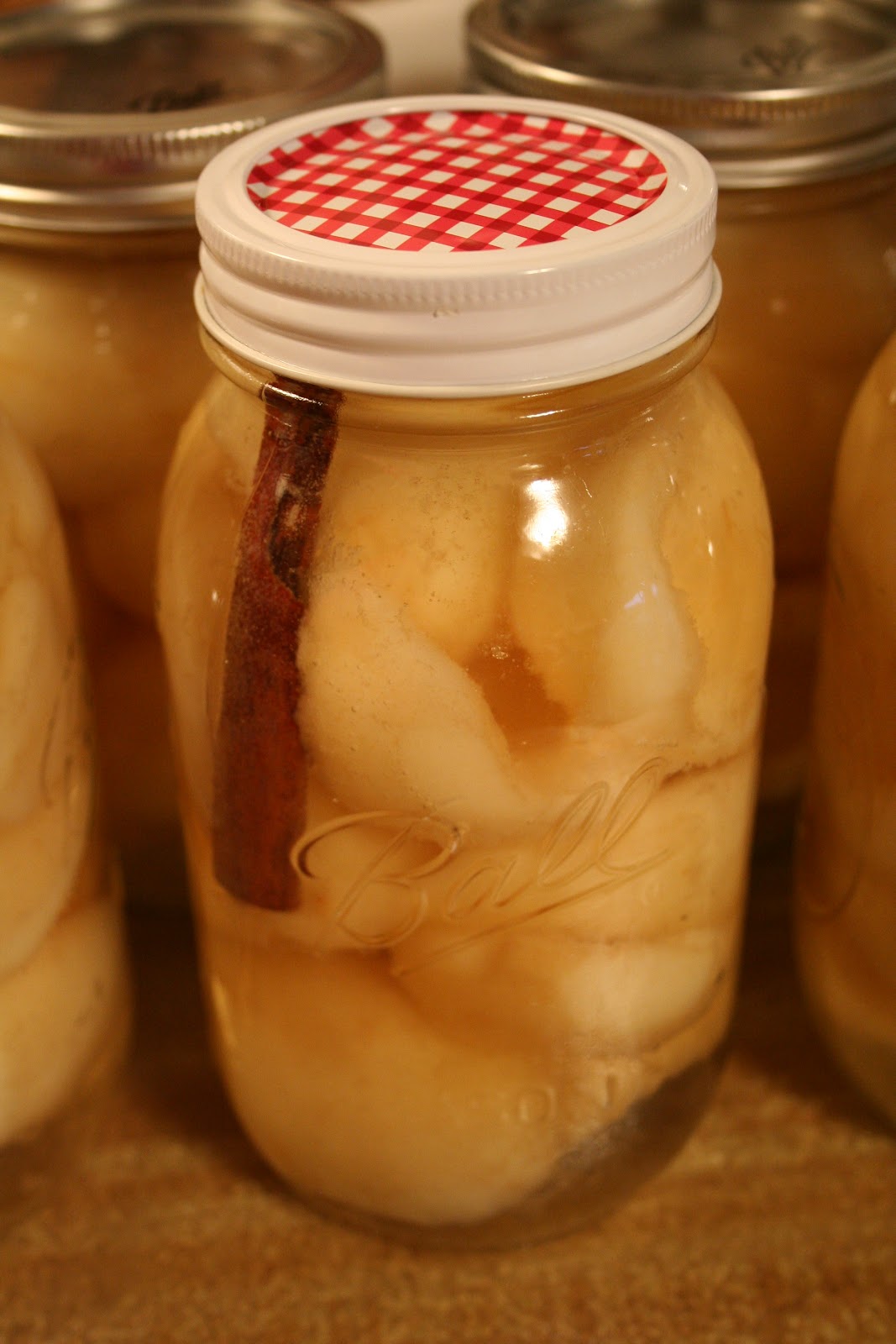
Pears from the pantry are just as great
from the jar as they are in a fruit dessert.
So here are the basics of this meal that evolved in a few hours while I was puttering this afternoon:
  • I thwawed some short boneless beef ribs out yesterday that I needed to use asap;
  • I had five zucchini to use up;
  • I have some canned tomatoes (not my own) to use up;
  • I found that the potatoes we got at a local (unnamed, because it's sort of "you get what you pay for") produce place the other day were punky and pathetic (and not even seed potato-worthy by the looks of them: they were in a huge bag) so I remembered a packet of polenta (vacuum-sealed) from an Italian foodie tour of Boston's North End that I took with some dear friends (Oh my, was it way back in 2007?? How can this be?);
  • I wanted to do something with some of the pears that I canned last fall;
  • I found a bottle of ginger-soy-sesame sauce that I got at a recent "dented cans" store (with an expiration date looming).

Braised Boneless Beef Short Ribs

This made eight ribs, enough for four people. I like beefy cuts with a bit of fat and some marbling and prefer these to pork ribs. I cooked them slow and low in the oven, after braising, for just over 2 hours in my four-quart Le Creuset while I prepared other things and did laundry. This is one of my favorite meals for busy days. You could probably do this in a slow-cooker, too, but just remember to braise the meat first. It locks in the flavor and also allows for the slow tenderization that occurs at low temperatures over several hours.

  • One packet of boneless beef short ribs (enough for two per serving)
  • 1 medium onion
  • 1 Tablespoon minced garlic
  • 1 Tablespoon crushed/minced ginger
  • 2 Tablespoons olive oil
  • 1-14 oz can diced tomatoes (reserve juice)
  • large pinch each: sugar, Kosher salt, ground pepper and cinnamon
  • 1/4 cup of ginger-soy dressing (this comes in many brands)
  1. Set oven to 300 degrees.
  2. Heat 1 Tbsp of the olive oil in a large four-quart, heavy-lidded pan.
  3. Chop onion and add to heated olive oil, along with garlic. Cook until translucent and browned. Add ginger.
  4. In the meantime, braise (on all four sides, about a minute a side) the short ribs in skillet with remaining olive oil. Remove to a plate or dish, if still doing sauce.
  5. To the onion-garlic mixture, add 1 can diced tomatoes, with juice, as well as all seasonings.
  6. Simmer for a minute and add 1/4 cup of the ginger soy dressing.
  7. Place each rib on top of the sauce mixture (which should come up the sides of the beef ribs).
  8. Cover with aluminum foil and seal with heavy lid.
  9. Place in 300 degree oven and cook for 2 to 2.5 hours: slow and low!
Creamy-Cheesy Polenta

The flecks are the unexpected addition of buckwheat to this Italian polenta mixture.

Polenta is indescribably delicious and a rustic staple in Italian country cooking: it is creamy, warm, comforting and the perfect accompaniment to short ribs. And polenta is almost as easy––and fast––as making hot breakfast cereal (and just as inexpensive: after all, it's cornmeal!). I was surprised that one cup of cooked polenta makes four hearty portions or eight regular ones (we had a lot leftover after the four of us were finished).


  • 1 cup polenta (or a good stoneground cornmeal will do nicely)
  • 2 cups chicken broth
  • 2 cups whole milk
  • 1 Tbsp herb of choice (I used dried marjoram but most any herb works)
  • 1 Tbsp butter
  • 1/2 tsp salt
  • fresh ground pepper
  • 1/2 cup Parmesan cheese (or other dry, flavorful cheese)
  1. On medium-high, bring milk and broth to almost a boil but not quite.
  2. Add 1 cup polenta, and 1 Tbsp herb, and stir constantly until the boil.
  3. Once it boils, turn heat to low and cook, while stirring, for 5-10 minutes. [You want it thick and porridgy and for the liquid to absorb.]
  4. Stir in butter, salt, pepper and cheese. 
  5. Keep warm until serving.

Pear Cobbler-ish

OK, I admit. I cheated. I had a can of Pillsbury® Cinnabon® rolls in the fridge that Henry got the other day. I won't do this again. It was "eh," especially as my husband removed the rolls and ate the pear filling underneath (which I would make again) and the boys ate the rolls. Either way, I'm not caving into Henry any more at the grocery store! The good news is that this took about five minutes to make and another 20 or so to bake. You can use any fruit, fresh, frozen (drain first) or canned.

  • 1 quart canned pears in light sugar syrup (preferably homemade, no, I insist: HOMEMADE!)
  • 1/4 cup cornstarch
  • 1/2 tsp cinnamon
  • 1 can of biscuits or cinnamon rolls (or homemade shortbread biscuits: next time!)
  1. Grease a 9x9 dish and set oven to 400 degrees.
  2. Drain juice from pears into a saucepan (mine were done in a light syrup so I did not add extra sugar). 
  3. Place pears at bottom of greased dish.
  4. Stir cornstarch into heating juice and whisk until thickened (add a bit of water if too thick).
  5. Add cinnamon to thickened juice.
  6. Pour juice mixture over the pears.
  7. Place biscuits or buns or what-have-you over fruit mixture.
  8. Bake for 15-18 minutes. Serve warm with whipped cream, yogurt or ice cream.


 You come back when you're ready!

 Catherine

March 23, 2012

Kentucky Wildflowers

One of my favorites, the Common blue violet, viola sororia, often seen along roadsides (a fall leaf above center shows scale).

We had such a strange, warm winter that I suppose it makes sense that we have had a very early spring. The redbud came out a month early and peaked in a day, it seemed, in the recent warm spell––in cooler weather, they will last for several weeks. My peach tree bloomed a month ago (so I'm not expecting peaches to sustain through any cold snaps, but you never know), the forsythia is almost spent and the Bradford pear trees, always the first bloomer, have come and gone. I saw a full bush of blooming lilacs further down the ridge today (easily three weeks early here). Our peonies have even budded and have ants crawling on the now tight, round future blossoms. A gardener in nearby Casey County is already picking asparagus and has noticed both blooms and green fruit on her strawberries!

The elusive Yellow Trout Lily (Dogtooth Violet, or Erythronium Americanum).
It was growing in a small clump of other emergent ones in a loamy creek side area.
The Trout Lily can apparently grow in established clumps over 300 years old.

A creekside bank covered with Dutchman's Breeches
with Wild Blue Phlox (Phlox Divaricata).
But what I enjoy most about our glorious (usually prolonged) Appalachian springs here in Kentucky are the many wildflowers that speckle the roadsides and woodlands. The cooler hollers and woodlands do slow down the plants but even this year the wildflowers are emerging earlier. I have a few spots where I look each year and I'm never disappointed. In fact, one such place in a creekside holler yielded several new discoveries this year: Dutchman's Breeches and the yellow Trout Lily. Both had established themselves in an area that I'd not seen them in before and that I drive past almost every day.

Dutchman's Breeches, Dicentra Cuculleria, are surely related to the Bleeding Heart.

A Kentucky woman carrying a bouquet of flowers.
© Wallace Kirkland, November 1954.
I will post more photos in the coming weeks as things emerge. Spring has sprung!

You come back when you're ready!

Catherine

March 7, 2012

During the Storm

Heading up the hill towards the farm to feed the calves: timing not so great.

The water tower on our ridge, about a mile from our farm.
This was that funny, pinky sky you hear about.
We realize our good fortune in escaping what could have been a very dangerous bullet. The storm last Friday, March 2nd that thickened and swelled and danced over our farm went on to create a large funnel over Somerset, our Pulaski County seat ten miles to the southeast of us, and then turned into a killer tornado less than an hour due east of us in Laurel County.

We had been storm-watching all day (see Before the Storm blog post) and by 6pm it seemed imminent. We still had to feed our two bottle-fed calves and went over together to our farm to do that (our doublewide, sans storm shelter, is across the street). I dropped Temple and Eli off at the cattle sorting building and waited in the car. As I did the sky darkened to almost night-like and the rain started. Then it hailed. Temple came out and told me to move the car under the shed (which was in vain–he had to do it!). Then the storm passed almost as soon as it started. I was glad to see the moon.

Before we got hammered.

We returned home after taking some photos and gathering some hail (Henry had done the same at the doublewide). The house was dark as we'd lost power so we sat with our flashlights for a bit, had another brief burst of wind and rain, and then decided to go see if our Mennonite friends, Melvin and Anna were OK over in Casey County. They were fine and had experienced more of a blast two days prior when they had a hard hail storm. We returned home, able to sleep a bit easier, but unaware of the tragedies that were unfolding in other parts of Kentucky and Indiana.


I will always be fascinated by tornados but I have a healthy respect for their power and randomness. It is possible to observe and see the weather here before it arrives, to be as prepared as possible, and to enjoy the awesome beauty–and ferocity–of nature. It is exhilarating in a strange way because you realize that, despite our best intentions, we are not in control.

There, but for the grace of God, go I.

Definitely trying to be a funnel cloud: view of the clouds over the southern part of our farm.

Trying to be funnel clouds.

All of our farm buildings were spared: we really just had a bad hail storm.

The cloud formations were amazing and all going in different directions and at different speeds.


The bad storm that hit us and moved along to the east.
The background was so black it appeared blue.


I was glad to see the moon above us, even as the clouds continued to move around us.


The view to the west after the storm at our farm: this passed over us.
Thickened tornadic layering over our knob after the storm passed through.

You come back when you're ready!

Catherine